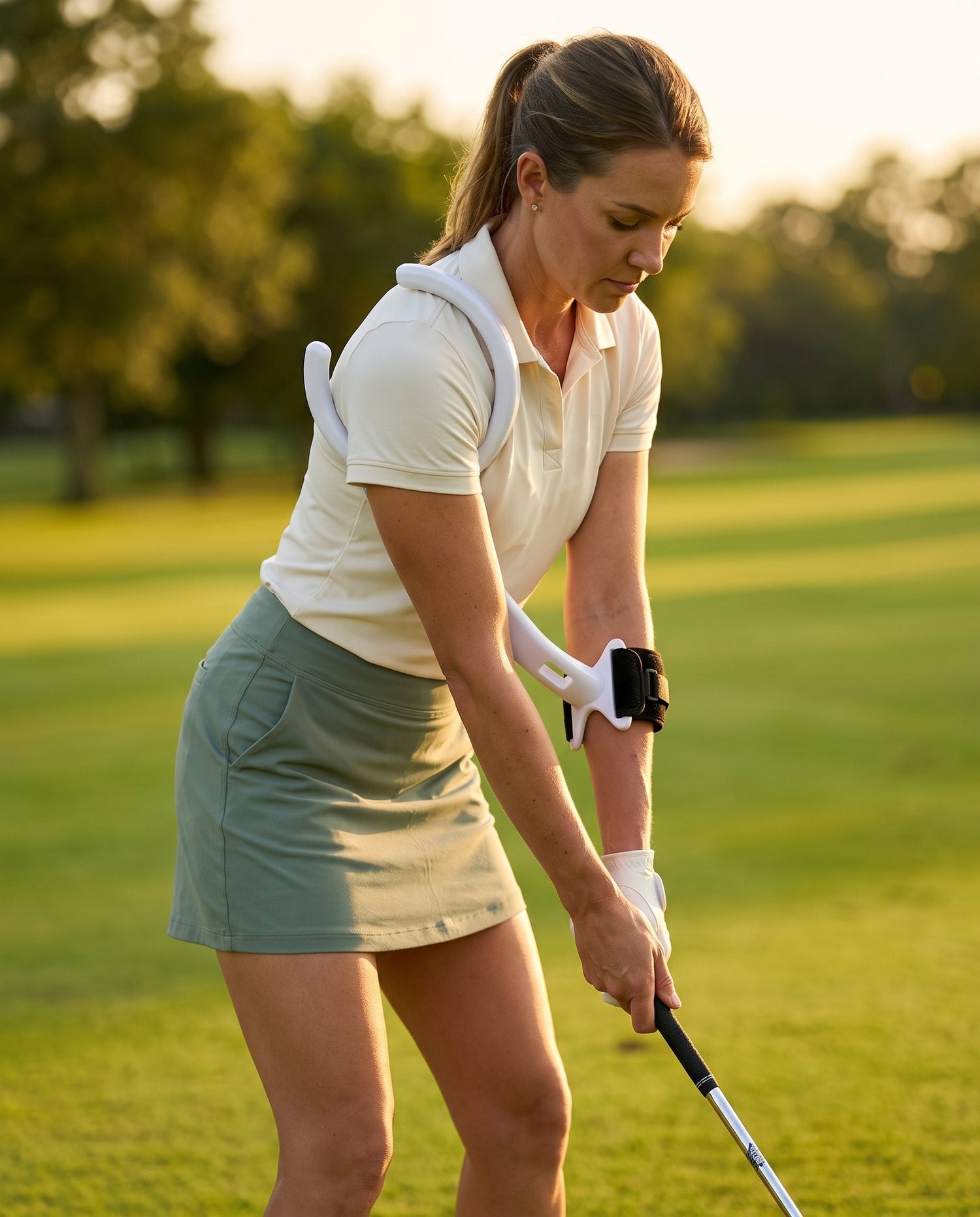
Thin shots are the twin of fat shots. Same fault, opposite result. The club is arriving at an inconsistent height because the radius of your swing is changing, and this time it changed short.
What actually causes it
The lead arm folds
If the lead arm collapses through impact, the club sits higher than it did at address and you catch the equator of the ball. This is the chicken wing, and it is the single most common cause of thin contact in recreational golf.
Standing up through impact
Lose your posture and everything rises with you, including the bottom of the arc. Often this is a reaction to being too close to the ball, or to the club being stuck behind you.
Trying to help it up
The instinct to lift produces exactly the shot you fear. The club adds loft, the low point moves back, and you thin it or top it.
The fix, in order
- Stabilise the lead arm. If it cannot fold, the radius cannot shorten. This is precisely what a connection frame or band does, and it is why the same aid fixes fat and thin.
- Keep your chest covering the ball. Feel your sternum stay over or slightly ahead of the ball through impact rather than rising away from it.
- Trust the loft. The club is built to get the ball airborne. Your job is to hit down and let it work.
A drill that gives you the feel
Hit half wedges with your feet together and your arms held to your chest. The narrow base removes any chance of lunging or standing up, and the connection removes the fold. Ten of those and the strike changes noticeably.
How to tell which fault is yours
Film your swing from face on. Pause at impact and again just after. If your lead arm is bent and your elbow has pulled away from your side, it is a connection problem. If your hips and chest have risen and your posture is taller than at address, it is an extension problem. They need different work, and guessing wastes weeks.